
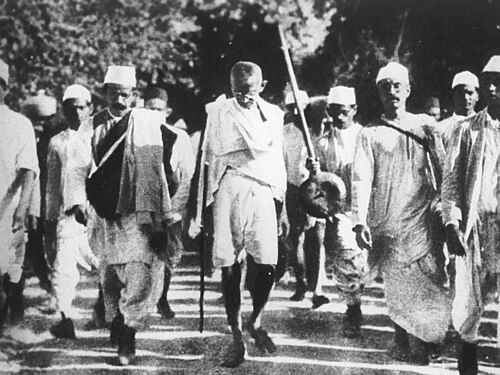
Civil Disobedience: A Participatory Course
Facilitated by Dr. James Cook (Sociologist, PhD University of Arizona 2000): email jamescook@audacitycat.com
Mondays, 6:30 pm – 8:30 pm, Second Floor Community Conference Room, Thomaston Public Library, Thomaston, Maine.
Course begins Monday September 21, 2026 does not meet Monday October 12, and ends Monday November 30, 2026.
Applications to join the course opened on September 1 and closed on September 14.
Summary
This ten-week course begins by exploring the foundational ethics and moral imperatives of civil disobedience through the works of Thoreau, Gandhi, and King before transitioning into the political dynamics of nonviolent power and strategic campaign design. Students will examine the legal mechanics of the justice system, participate in “Know Your Rights” roleplays, and learn tactical skills ranging from reconnaissance to the affinity group model of decentralized organization. The course also provides intensive training in operational risk management, nonviolent discipline under pressure, and the critical logistics of jail support and media strategy.
Participants should participate in this course for the abstract purpose of familiarizing themselves with the political concepts and tools that create the necessary friction to challenge unjust structures. The purpose of this course is also practical: study groups will emerge from the course with greater knowledge of the conceptual elements of disobedience, experience with techniques used in civil disobedience campaigns, increased solidarity, and a written Group Action Protocol containing group agreements regarding the ideological, organizational, and technical elements of a civil disobedience campaign. Each week will feature a focal topic. However, each week will begin with time to reflect on and consolidate information from previous weeks and invite personal reflections. At the end of each week, we will make progress developing a Group Action Protocol for a real campaign of civil disobedience.
Because the goal of the course is to develop the practical solidarity necessary to ethically and effectively engage in civil disobedience, participants’ commitment to prepare thoroughly for and participate in each meeting is essential.
Course Schedule and Readings
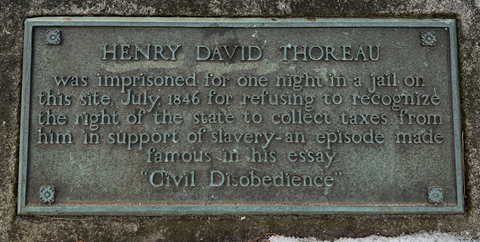
Week 1 (September 21): Philosophy of Civil Disobedience & The Moral Imperative: Thoreau and Gandhi
Overview: Before discussing how to break a law, a group must establish why it is morally justified to do so. This week explores the foundational ethics of civil disobedience—examining the friction between a citizen’s conscience and the state’s legal authority.
Readings:
Thoreau, Henry David (1849). Civil Disobedience (Originally published as Resistance to Civil Government). Online at https://blogs.law.columbia.edu/uprising1313/files/2017/10/Civil-Disobedience-by-Henry-David-Thoreau.pdf
Gandhi, Mohandas K. “The Practice of Satyagraha.” pp. 67-78 in Selected Writings of Mahatma Gandhi. Online at https://www.mkgandhi.org/ebks/SWMGandhi.pdf
Discussion Questions:
- Thoreau claims that people should be “men first, and subjects afterward.” How do we define the boundary where a law becomes so unjust that compliance becomes a moral failure?
- Based on these texts, is civil disobedience an act meant to subvert the rule of law entirely, or is it an act that highly respects the rule of law by accepting its penalties? How does this distinction change our public messaging regarding civil disobedience?
- When we think of the conflict between conscience and authority, we tend to think of laws — to mandate or prohibit action, to create bureaucratic processes requiring approval for action, and to raise or lower the cost of action. But judicial rulings, executive orders, military commands, and communicated demands are other means by which governments and their leaders attempt to shape our action. Does the same reasoning about civil disobedience apply to different kinds of disobedience?
Activity: The Moral Red Lines Exercise. Every participant receives an index card and anonymously writes down one law they would willingly break for a cause, and one law they would never break. Collect, post them on a wall, and map out where the group’s collective ethical boundaries overlap.
Additional Resources:
- James’ online lecture on conformity as a social variable: https://www.youtube.com/watch?v=6p4AHO2epqM
- War Resisters League on tax resistance: https://www.warresisters.org/war-tax-resistance/
- Documentary (1h17m): https://www.youtube.com/watch?v=O4dDVeAU3u4
Week 2 (September 28): Philosophy of Civil Disobedience & The Moral Imperative: King and Berrigan
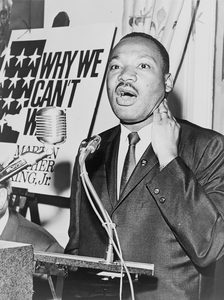
Overview: In the second half of the 20th Century, Martin Luther King Jr. and Daniel Berrigan led two civil disobedience campaigns that differed greatly in size, scope, and aims. Both, however, were firmly centered around identifying a split between abstract moral principles and immoral actions carried out by the powerful. What practical approaches can we observe and adopt from these campaigns as we develop our own?
Readings:
King Jr., Martin Luther (1963). Letter from Birmingham Jail. Online at https://www.africa.upenn.edu/Articles_Gen/Letter_Birmingham.html
Berrigan, Daniel (1968). “Catonsville 9 Statement.” Online: https://www.historyisaweapon.com/defcon1/berrigancatonsvillenine.html
Starhawk (2002). Excerpt from Webs of Power: Notes from the Global Uprising. Online: https://www.thesunmagazine.org/articles/25801-webs-of-power
Discussion Questions:
King distinguishes between “just” and “unjust” laws. What is the difference, and how do you recognize this difference in the world?
If The Audacity disagrees internally on whether a specific law is unjust, what framework will we use to find consensus? How do we align as a group before action?
If “justice delayed too long is justice denied,” how long is too long, practically speaking?
The actions of the Catonsville 9 were both rhetorical in metaphor and practical in direct obstruction. What is the effect of rhetoric here? Of the action? How should rhetoric and direct action be balanced in a civil disobedience campaign?
What did Gandhi and King get wrong?
Activity: Your Statement Written, Our Statement Mapped.
Before we meet: write your own statement of no more than one page identifying a core moral outrage of the times and outlining the moral imperative of your response to it.
When we meet: we will read our statements
After we meet: we will create a collective cognitive map featuring the arguments of all of these statements
Additional Resources:
- Extra reading from philosophy on the conditions and context of civil disobedience: Rawls, John (1999). A Theory of Justice. pp. 319-342. Online: https://www.cita.or.id/wp-content/uploads/2016/06/John-Rawls-A-Theory-of-Justice-Belknap-Press-1999.pdf
Week 3 (October 5): Political Theory & The Dynamics of Nonviolent Power
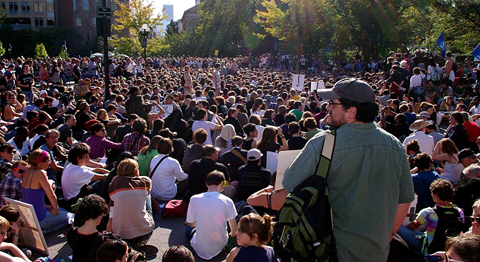
Overview: Civil disobedience is not merely symbolic; it is a mechanism of political power. This week moves from individual morality to strategic leverage, studying how regimes rely on the implicit cooperation of the public—and what happens when that cooperation is intentionally withdrawn.
Readings:
Sharp, Gene (1976). “Disregarded: The Power of Nonviolent Action”. Porter Sargent Publishers. Online at https://nonviolence3.com/sharp/disregarded/
Arendt, Hannah (1970). “Civil Disobedience” in Crises of the Republic. Harcourt Brace Jovanovich. Online at https://blogs.law.columbia.edu/uprising1313/files/2017/10/Arendt-Disobedience.pdf
Discussion Questions:
- Hannah Arendt suggests that civil disobedients are fundamentally different from ordinary criminals because they act as a organized group bound by a shared opinion. How does acting as a collective alter the political impact of lawbreaking compared to a solo act?
- If civil disobedience relies on creating friction in a system so it is too costly to run, what types of friction (economic, social, or administrative) are we prepared to create? What are the costs and benefits of such friction?
- Gene Sharp argues that a ruler’s power completely dissolves if subjects withdraw their consent and cooperation. In our target issue, who is the “ruler” (the target), and what specific pillars of cooperation do they rely on?
Activity: Pillars of Support Mapping. Draw a monument representing our political opponent or target institution. Around it, draw the “pillars” holding it up (e.g., media compliance, police enforcement, investor funding, public apathy). Discuss which pillars we are best suited to weaken.
No Class Meeting on October 12, to honor Indigenous Peoples’ Day
Week 4 (October 19): Legalities—The Mechanics of the Justice System
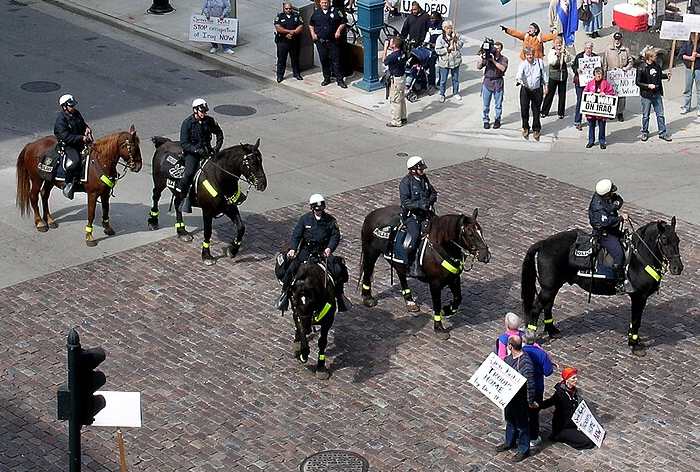
Overview: This week strips away the romance of activism to look clearly at the legal machinery. Participants will examine what happens to the human body and the citizen’s record once an arrest occurs, analyzing the specific charges, liabilities, and constitutional protections relevant to direct action.
Readings:
Amnesty International (2024). Civil Disobedience Toolkit: A Guide to Civil Disobedience, p. 1-15. Online at https://www.amnesty.org/en/documents/act10/7471/2024/en/
National Lawyers Guild (NLG). Know Your Rights: A Guide for Protesters. Online at https://www.nlg.org/wp-content/uploads/2022/06/Know-Your-Rights-Booklet-2022.pdf
Discussion Questions:
What are the specific legal definitions and local penalties for charges like “Failure to Disperse,” “Criminal Trespass,” or “Obstruction of a Highway”?
How does an individual’s identity—such as race, citizenship status, gender, or class—dramatically alter their experience and safety within the jail and court systems?
Are participants in this group prepared to face maximum legal penalties, or is the strategic goal to navigate the system to minimize long-term records?
Activity: Know Our Rights Roleplay. Pair up and practice interaction scenarios with law enforcement. One person plays a police officer giving an order (lawful or unlawful), and the other practices stating clear legal boundary phrases (“I am exercising my right to remain silent,” “Am I free to go?”, “I do not consent to a search”) without escalating tension or accidentally forfeiting rights.
Week 5 (October 26): Strategic Frameworks & Campaign Design
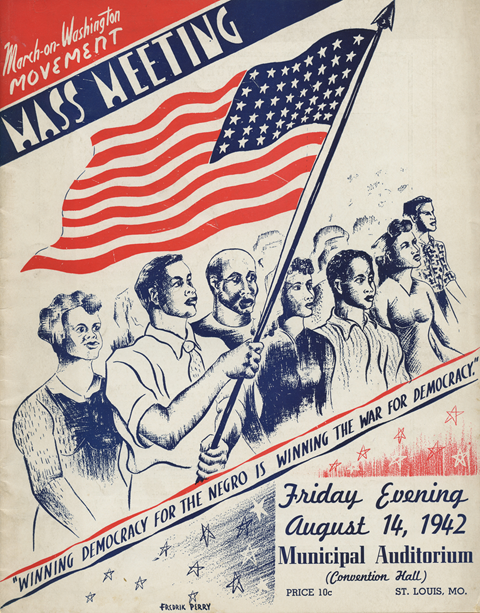
Overview: Isolated, sporadic acts of protest rarely succeed. This week teaches participants how to treat civil disobedience as a high-leverage tool embedded within a long-term, multi-tiered strategic political campaign.
Readings:
Engler, Mark and Engler, Paul (2016). This Is an Uprising: How Nonviolent Revolt Is Shaping the Twenty-First Century. Nation Books. (Chapters on “The Pivot” and “The Pillars”). — Printed handout shared on October 19
Amnesty International (2024). Civil Disobedience Toolkit: A Guide to Civil Disobedience, p. 16-35. Online at https://www.amnesty.org/en/documents/act10/7471/2024/en/
Discussion Questions:
The Englers contrast “structure” organizing (long-term institution building) with “momentum” organizing (mass mobilization). Where do we currently sit as a group, and how can civil disobedience act as a bridge between both models?
What is the explicit, measurable “demand” of our action? Is it an incremental goal or a structural goal?
How do we prevent a highly disruptive action from alienating the broader public base we need to win over?
Activity: The Escalation Ladder. Draw a ladder with 6 rungs. Rung 1 is low-risk, low-disruption (e.g., a petition). Rung 6 is high-disruption civil disobedience (e.g., a blockading lockdown). Design a hypothetical 6-month campaign where the group intentionally climbs each rung of the ladder to build tension before executing the main action.
Week 6 (November 2): Tactics—Designing the Action
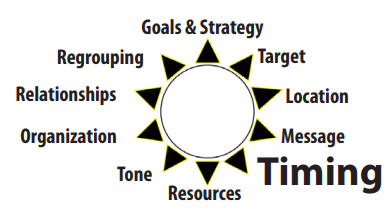
Overview: Strategy is the grand design; tactics are the actual tools deployed on the day. This week surveys the physical mechanics of intervention, looking at everything from sit-ins and structural blockades to modern digital and economic disruptions.
Readings:
Sharp, Gene (1973). 198 Methods of Nonviolent Action. Online at https://commonslibrary.org/wp-content/uploads/GeneSharp_198Tactics.pdf
The Ruckus Society. Action Strategy: A How-To Guide. Online at https://static1.squarespace.com/static/66f1b5bcef78d304e1ceb2ab/t/69b1e6653dc3e5799e9562a2/1773266533498/RuckusActionStrategyGuide-1.pdf
Discussion Questions:
Reviewing Sharp’s 198 methods, which tactics are expressive (symbolic statements) and which are structural (physically stopping a process)? Which style matches The Audacity’s current strategy?
What makes an action space logistically viable? What are the choke points, exit routes, and geographic features of a typical target location?
How will The Audacity define “nonviolence” in practice? Does it include property destruction, or does it strictly forbid it?
Activity: The Sandbox Scouting Exercise. Choose a local landmark or corporate headquarters using online maps. Work to draft a tactical “reconnaissance report”: identify target entry points, camera locations, public access zones, and potential locations for an action chosen by participants.
Week 7 (November 9): Group Structures & The Affinity Group Model
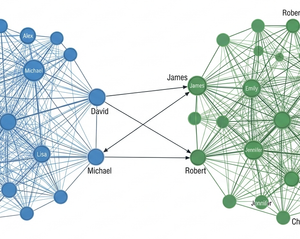
Overview: Sustainable civil disobedience relies on highly decentralized, resilient human networks. This week breaks down the “Affinity Group” model works with autonomous groups of 5 to 15 people who know and trust one another.
Readings:
Nicola Paris. 2019. “Affinity Groups for Non-Violent Direct Action.” Online at https://commonslibrary.org/wp-content/uploads/affinity-groups-March-2019.pdf
Nancy Alach. Undated, ActUP NY. “Affinity Groups and Support.” Online at https://actupny.org/documents/CDdocuments/Affinity.html
Discussion Questions:
How does a decentralized network of affinity groups affect disruption by authorities, compared to top-down organization with a single leader?
How will The Audacity handle internal disagreements during a live, fast-moving action? Will one person direct, and what happens if that person is removed from the situation? Or will “horizontal” decision-making occur, and what does that look like?
What specific support roles (jail support, media liaison, medical/first aid) are participants willing to step into if they do not wish to be the ones arrested?
How does the size of the group in action affect the need for affinity groups and spokes-councils?
Activity: Affinity Group Formation & Role Drafting. Divide the entire group into mini-affinity groups (4-6 people). Each group must assign internal roles for a mock action: 2 “arrestable” direct actionists, 1 police liaison, 1 media spokesperson, and 1 designated off-site jail support contact.
Week 8 (November 16): Operational Planning & Risk Management
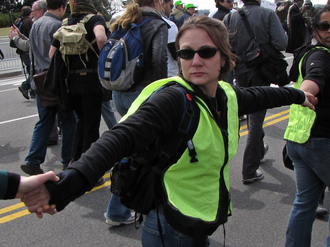
Overview: Good intentions cannot save a poorly planned action. This week dives into dry, necessary logistics: communications security, safety protocols, emergency contingency planning, and calculating the direct risks to participants.
Readings:
Amnesty International (2024). Civil Disobedience Toolkit (Specifically Section: “Step 3: Preparing to Implement Tactics” and “Risk Assessment matrices”). . Online at https://www.amnesty.org/en/documents/act10/7471/2024/en/
Electronic Frontier Foundation (EFF). Attending Protest: Surveillance Self-Defense. Online at https://ssd.eff.org/module/attending-protest
Discussion Questions:
What is our group’s protocol if an action is compromised or leaked before it begins?
How will we secure our communications (e.g., using encrypted apps like Signal, avoiding biometric phone locks) leading up to an action? When will our communications be public?
What are the group’s “hard stops”—conditions under which the coordinator will completely call off the action for safety reasons?
Activity: The Red-Teaming Scenario. The facilitator presents a detailed action plan to the group. The group splits into a “Red Team” (acting as police/opponents trying to ruin the action) and a “Blue Team” (the planners). The Red Team invents unexpected disruptions (e.g., “The weather drops below freezing,” “Private security locks the gates early,” “An infiltrator shows up”). The Blue Team must dynamically adjust their operational plan on a whiteboard.
Week 9 (November 23): Nonviolent Discipline & De-escalation
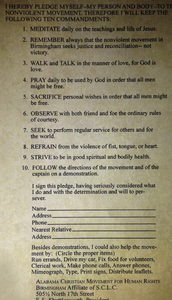
Overview: The success of civil disobedience frequently hinges on maintaining discipline when facing intimidation, counter-protesters, or police aggression. This week focuses on psychological readiness and physical techniques required to hold a line calmly under intense pressure.
Readings:
Lakey, George (2018). How We Win: A Guide to Nonviolent Direct Action Campaigning. Melville House. (Section on Nonviolent Discipline). Printout handed out November 16.
King Jr., Martin Luther (1963). Commitment Card. Online: https://minio.la.utexas.edu/webeditor-files/coretexts/pdf/mlk_commitment_card.pdf
Discussion Questions:
How do we prepare ourselves psychologically to not yell back, run away, or strike back when threatened or insulted?
If an outside individual or fringe element joins our action and starts acting aggressively or destructively, how will this group of The Audacity isolate that behavior and protect the collective agreement?
How does maintaining nonviolent discipline shift the narrative in public media coverage when law enforcement uses force?
Activity: The Hassle Line (Pressure Testing). Form two parallel lines facing each other. Line A plays aggressive counter-protesters or overzealous security guards yelling, mocking, and crowding space. Line B must maintain a linked-arm barrier, practice breathing techniques, maintain eye contact, and use verbal de-escalation strategies without breaking character or reacting aggressively.
Week 10 (November 30): Jail Support, Media, & Post-Action Care
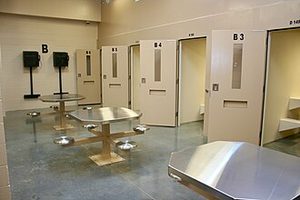
Overview: An action is not finished when the police vans drive away. The final week covers the critical closing cycle: tracking people through the booking process, executing a media strategy to frame the narrative, and providing long-term emotional and material solidarity to those arrested.
Readings:
Midnight Special Law Collective (n.d.). “A Hand Becomes a Fist: Legal Solidarity Handbook.” Online at https://www.midnightspecial.net/files/legalsolidarityhandbook.pdf
Ryan, Charlotte (1991). Prime Time Activism: Media Strategies for Grassroots Organizing. South End Press. Online at https://archive.org/details/primetimeactivis0000ryan (free account required)
Discussion Questions:
Who is staying at the jail house? How long? For what purposes?
Do we have a cash bail fund ready? Do we seek to bail out the arrested or to keep them in jail?
Who owns the narrative of our action? If the mainstream media frames our civil disobedience as “rioting” or “traffic chaos,” what is our immediate digital counter-strategy?
How do we identify and combat activist burnout and post-traumatic stress within our group after the high-adrenaline window closes?
Activity: Drafting the Group Protocol. The culminating exercise. The group collaborates on a shared Google Doc or large poster boards to write their official, binding Group Action Protocol. This includes our agreed-upon definition of nonviolence, internal decision-making structures, communication channels, and a pledge of practical legal/financial support for future actions, with specification of outside assistance or mutual aid.